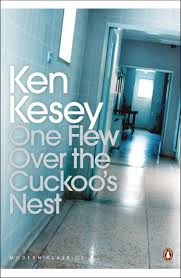
There were mixed feelings this month about the book, some
fantastic, some not-so fantastic! Here are our reviews:
I had seen the film previously to reading the book so I was
intrigued to see the comparisons. However upon reading I immediately visualised
Jack Nicholson which may have possibly stilted my portrayal.
I felt this was a
great read, especially considering the subject matter, it is well written and I
would recommend it.
I have yet to finish this book (I am not finding it an
overly easy book to pick up as and when), however I am enjoying what I have
read so far.
The subject matter is quite intense and while I can imagine
the setting it is quite hard to visualise the characters because Kesey tends to
swing from one character to the next and includes schizophrenic images which
leads to more distortion.
After doing some background research on Kesey it is evident
that his time spent in similar surroundings leaks into the book and his writing
style, it is quite clearly written in the 60’s when experimental drug use was
at an all-time high.
Having seen the film also, although the main character is
described with red fiery hair I cannot imagine anyone but Nicholson playing the
part-the book is written for him.
Overall I will endeavour to finish the book and glad I have
given it a chance.
I have yet to finish the book as I found the writing style
difficult to begin with, however towards the middle and end of the book I have
come accustomed to Kesey’s style and grammar-that said there is no tension in
Kesey’s writing, he is quite descriptive and I wanted to be intrigued as to
what will happen next rather than having it all explained to me out-right.
I especially enjoyed Kesey’s portrayal of the chief, it must
have been quite a difficult feat to write about a character so thoroughly
through another character eyes-I applaud him for this.
Like Wendy, it is evident that Kesey has had some experience
of the hospital and the treatments involved and the drawings and sketches add
to the books character and authenticity.
I found this book a difficult read, especially in the
beginning. However I am glad I read it. Kesey’s style of writing is completely different
to anything else I have read (I actually preferred McEwan’s in Atonement).
I agree with the others that considering the subject matter
it was written well and I could visualise the characters and setting.
I love this book and it was my second time reading it. I
found Kesey’s portrayal of the characters and setting very descriptive which
enabled me to visualise the characters well.
The 60’s referencing was very evident, especially with the
portrayal of the ‘black people’, which made the book quite sinister in parts.
I’m surprised others in the club didn’t take to the book- I flew
though it and found I was a lot sadder reading it the second time around
because I knew what was coming at the end.
Some of Kesey’s writing seems abit erratic however-some sentences
seem to start half way through and I found myself re-reading parts to get to
grips with what has happening. I also couldn’t read the preface-it was too
confusing and I just wanted to get on with the body of the book.
This is my 3rd favourite book I have read in the
club and the opening line of the book is one of the best I have ever read.
As always, thank you to everyone who came along to the
meeting, it was great to hear your thoughts!
-Carey
Comments
Post a Comment